
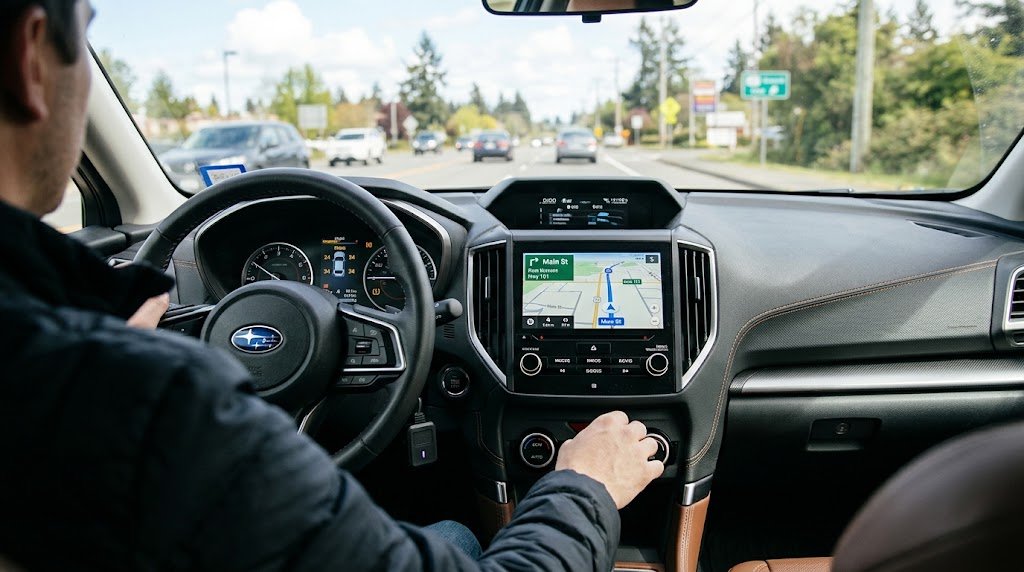
Driving a modern car feels less like steering a mechanical machine and more like piloting a rolling supercomputer. Underneath that shiny hood lies an intricate web of sensors, microprocessors, and wireless signals working constantly to keep you safe and moving forward.
Yet, millions of drivers turn the key every single day without fully understanding the silent digital guardians keeping their rides smooth. Demystifying your vehicle’s inner tech does not require an engineering degree—just a quick peek under the dashboard at three game-changing systems: OBD-II, TPMS, and GPS.
1. The OBD-II System: Your Car’s Digital Translator
Ever wondered what actually happens when that dreaded “Check Engine” light illuminates your dashboard? That is your On-Board Diagnostics II (OBD-II) system waving a giant yellow flag to signal that something needs attention. Standardized across all consumer vehicles since 1996, OBD-II acts as the central brain monitoring engine health, emissions, and transmission metrics.
Instead of guessing why your car is making a strange noise, mechanic technicians tap into the standardized 16-pin OBD-II port usually located under the driver-side dashboard. Using a diagnostic scanner, they pull specific trouble codes that pinpoint exact component failures in seconds.
Modern car enthusiasts do not even wait for a shop visit to check their vehicle diagnostics. Inexpensive Bluetooth OBD-II scanners now connect directly to your smartphone, translating cryptic error codes into plain English before you even open your hood.
2. TPMS: The Silent Guard of Tire Safety
Tire pressure might sound like old-school maintenance, but keeping rubber properly inflated is now a high-tech affair thanks to the Tire Pressure Monitoring System (TPMS). Introduced as mandatory safety equipment in many countries during the mid-2000s, TPMS actively prevents blowouts, extends tread life, and optimizes fuel efficiency.
There are two primary ways TPMS keeps tabs on your wheels: direct and indirect systems. Direct TPMS uses tiny hardware sensors mounted inside each wheel to transmit real-time pressure readings straight to your instrument cluster.
Indirect TPMS, on the other hand, works alongside your vehicle’s Anti-Lock Braking System (ABS) wheel speed sensors. It calculates rotational speed differences to infer when a under-inflated tire is spinning faster than its fully inflated counterparts.
3. GPS Tech: Beyond Basic Turn-by-Turn Directions
Global Positioning System (GPS) technology transformed how drivers navigate from point A to point B, effectively turning physical paper maps into ancient history. By triangulating signals from an orbiting constellation of satellites, your car calculates its exact location, speed, and heading anywhere on the planet.
In 2026, automotive GPS does far more than just whisper turn directions through your speaker system. Modern setups integrate live cellular data to deliver real-time traffic updates, detour options around road hazards, and accurate arrival estimates based on live conditions.
Furthermore, onboard GPS plays a crucial role in modern telematics and vehicle recovery systems. If your car is stolen or involved in an accident, built-in GPS location tracking allows emergency services or law enforcement to pinpoint your exact coordinates in seconds.
4. How These Three Technologies Synergy Together
While OBD-II, TPMS, and GPS handle distinct tasks, modern connected cars merge their data streams to create an intelligent, unified driving environment. Think of them as a team of specialized technicians constantly sharing notes behind the scenes.
For instance, an advanced telematics system might take tire pressure data from your TPMS, cross-reference engine stress from your OBD-II port, and pair it with your GPS location. If a tire loses pressure on a remote highway, your system can automatically locate nearby service centers while monitoring engine temperatures.
Insurance companies and fleet managers also leverage this trio of vehicle tech to encourage safer driving habits. By analyzing vehicle speed from GPS, tire stability from TPMS, and engine diagnostic logs from OBD-II, connected software builds a comprehensive profile of driver habits.
5. Easy DIY Maintenance Steps for Every Car Owner
Understanding your car’s underlying tech opens up exciting possibilities for easy, cost-effective DIY vehicle care. Investing less than thirty dollars in a pocket-sized OBD-II Bluetooth scanner lets you read diagnostic trouble codes yourself, saving you expensive diagnostic fees at repair shops.
Taking care of your TPMS is equally straightforward and saves money at the gas pump. Check your recommended pressure on the driver-side door jamb sticker, inflate your tires while cold, and reset your TPMS memory via dashboard settings after topping up air.
Lastly, keep your onboard GPS operating smoothly by maintaining up-to-date system software and offline map data. System updates patch software bugs, add newly built roadways, and ensure emergency location protocols remain fast and reliable when you need them most.
6. Embracing the Future of Smart Automotive Care
As software-defined vehicles become the new standard on global roads, staying informed about your car’s digital infrastructure is no longer optional. The line between traditional mechanical maintenance and computer software management is fading rapidly with each new model year.
Embracing tools like OBD-II diagnostics, monitoring TPMS alerts, and using connected GPS routing transforms you from a passive driver into an empowered vehicle owner. You will save money on unnecessary repairs, boost fuel economy, and enjoy total peace of mind every time you get behind the wheel.
Next time you turn your ignition key and watch your dashboard light up like a launch pad, take a moment to appreciate the digital orchestra at work. Your car is constantly communicating—and now you hold the key to understanding every word it says.