When gearheads think of global car modification epicenters, places like Tokyo, Los Angeles, or Stuttgart usually come to mind first. However, Southeast Asia has been quietly fueling a jaw-dropping revolution in custom automotive design, with Indonesia leading the charge.
Walk into any major car show in Jakarta, Surabaya, or Bandung, and you will quickly realize that Indonesian builders do not follow trends—they invent them.
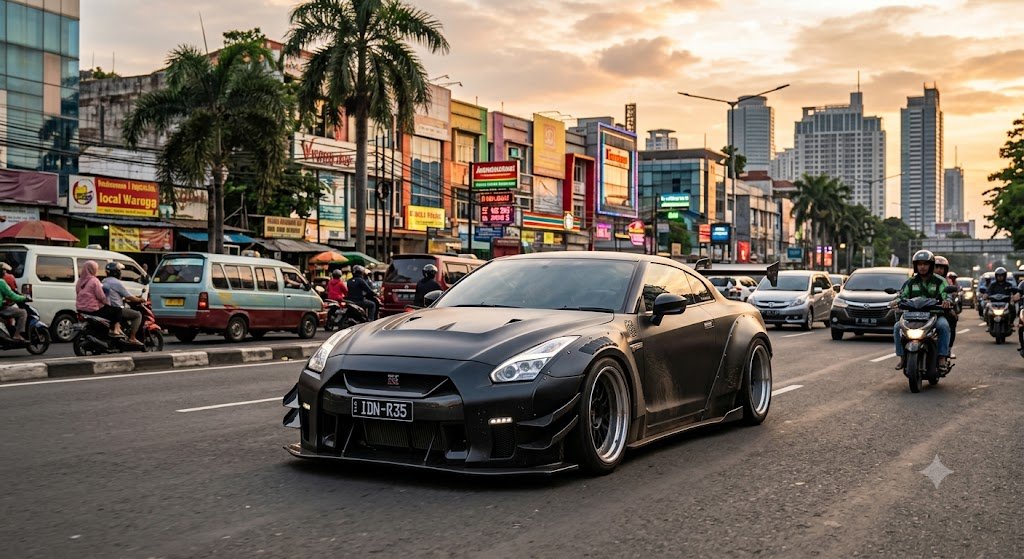
Local tuners are taking everyday commuters and rare sports cars, chopping up their factory metal, and grafting on custom widebody kits that leave international onlookers completely speechless.
1. The Slammed City Hatchback with Supercar Ambitions
In many parts of the world, a compact city hatchback is just a reliable daily commuter meant for grocery runs and tight parking spots. In Indonesia, however, local customizers see a blank canvas waiting for massive fiberglass overfenders and aggressive air suspension setups.
These builds feature custom-molded widebody arches that widen the vehicle’s track by several inches, allowing massive ultra-wide three-piece forged wheels to tuck neatly under the metal. Combined with custom front splitters and massive rear diffusers, these micro-machines look like track-ready mini monsters ready to conquer the street.
2. JDM Legends Reimagined with Local Artistry
Japanese Domestic Market (JDM) icons like the Nissan Silvia, Toyota Supra, and Mazda RX-7 hold sacred status among car enthusiasts worldwide. While purists elsewhere might hesitate to cut into factory fenders, Indonesian builders embrace bold creativity with incredible precision.
Local shops craft bespoke widebody kits from scratch using metal sheet metal or high-grade carbon fiber instead of off-the-shelf plastic molds. The result is a seamless fusion of classic 1990s Japanese sports car lines with modern, razor-sharp widebody aesthetics that command instant respect.
3. The Unlikely Family MPV Turned VIP Cruiser
Multi-Purpose Vehicles (MPVs) are the undisputed kings of Indonesian roads, serving as practical family haulers for millions. Naturally, the island nation’s creative modification scene decided these boxy family vans deserved the full VIP widebody treatment.
Imagine a practical family van lowered just millimeters above the asphalt via digital air suspension, featuring hand-sculpted wide fenders that house deeply recessed chrome wheels. These builds combine executive luxury interiors with extreme exterior proportions, proving that practical transportation never has to be boring.
4. Vintage Euro Classics Cooked with Modern Flare
Indonesian car culture holds a deep affection for classic European steel, particularly vintage BMWs, Mercedes-Benzes, and air-cooled Porsches. Rather than keeping them strictly original, local craftsmen are building restomod widebody masterpieces that bridge generations.
Custom fabricators painstakingly widen the classic body lines while preserving the vehicle’s original iconic silhouette. Equipped with modernized turbochargers, custom LED lighting, and track-ready stances, these retro-modern hybrids frequently steal the spotlight at international automotive expos.
5. The Safari-Style All-Terrain Widebody Off-Roaders
Widebody modifications in Indonesia are not strictly limited to asphalt-scraping stance cars designed for smooth show floors. The country’s rugged mountain trails and dense tropical terrain have inspired a booming trend of off-road widebody builds.
Popular SUVs and double-cab pickups receive heavy-duty wide fender flares designed to clear massive mud-terrain tires and long-travel suspension systems. These rugged beasts match aggressive desert-racer aesthetics with true overland capability, built to tackle tough terrain across the archipelago.
6. The Rise of Nationally Crafted Body Kits
What makes the Indonesian widebody scene truly extraordinary is the rapid shift from importing overseas aftermarket parts to creating homegrown brands. Indonesian designers and body shops now produce world-class aerokit packages that are exported to enthusiasts worldwide.
Collaborations between local automotive influencers, digital artists, and master body sculptors have put Indonesian craftsmanship on the global map. International tuner events now regularly showcase Indonesian-built widebody kits alongside legendary Japanese and European brands.
Why Indonesian Car Culture is Captivating the World
The global automotive community is taking notice of Indonesia because the country’s modification style is driven by pure passion, resourcefulness, and uninhibited imagination. Builders are not afraid to mix contrasting styles, experiment with bold materials, or engineer complex suspension setups from scratch.
As events like the Indonesia Modification & Lifestyle Expo (IMX) continue to grow, local builders are setting new benchmarks for custom vehicle fabrication. If you are a fan of widebody stance, extreme fitment, and creative engineering, keep your eyes firmly locked on Indonesia’s garage scene.
Frequently Asked Questions (FAQ)
What makes widebody builds in Indonesia different from other countries?
Indonesian builders are renowned for their custom hand-fabrication skills, often sculpting bespoke body kits from sheet metal or fiberglass rather than relying solely on pre-fabricated aftermarket kits. This creates truly one-of-a-kind designs with extreme wheel fitment and unique styling.
Are these modified widebody cars legal to drive on Indonesian roads?
Vehicle modification regulations exist, so many extreme widebody cars are built primarily as show cars or weekend cruisers. However, many enthusiasts use adjustable air suspension systems to raise the vehicle’s ride height for safe street driving during daily use.
Where can tourists or car enthusiasts see these custom widebody builds in person?
Major automotive events like the Indonesia Modification & Lifestyle Expo (IMX) and the Gaikindo Indonesia International Auto Show (GIIAS) are prime places to see top-tier builds. Local car meets in major cities like Jakarta, Surabaya, and Bandung also feature incredible custom cars.
How much does it typically cost to build a custom widebody car in Indonesia?
Costs vary significantly depending on materials, base vehicle, and whether the kit is off-the-shelf or fully custom hand-fabricated. A basic widebody installation can start at a few thousand dollars, while full custom show-quality builds can cost tens of thousands of dollars.