
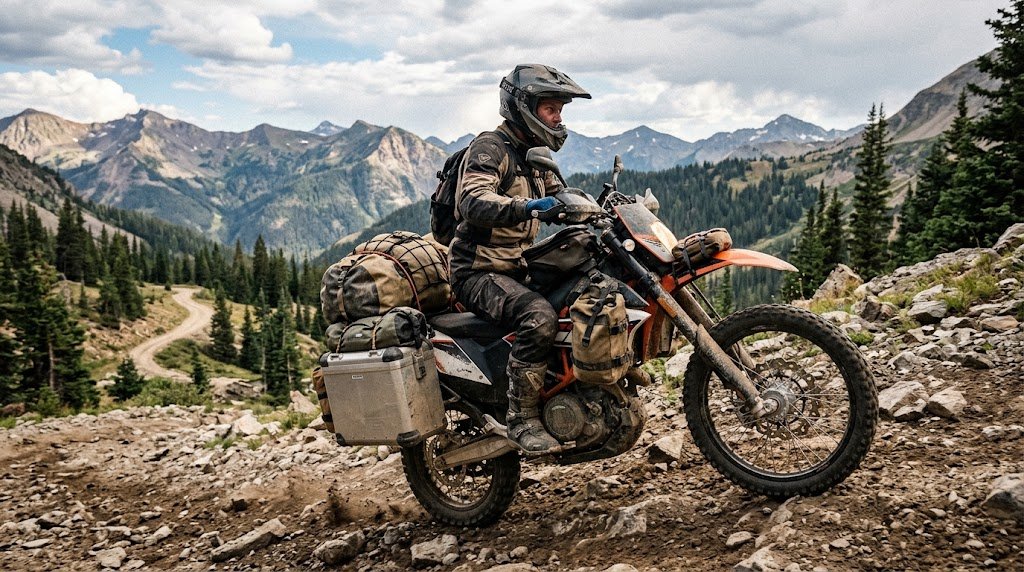
The quiet rumble of an idling single-cylinder engine is often the prelude to an incredible off-road adventure. Riders pack their gear, lace up their boots, and prepare to conquer dirt tracks, mud pits, and rocky mountain passes. But before twisting the throttle toward the trail ahead, one critical question often goes completely unasked at the loading ramp.
How much payload can your trusty dirt bike actually carry without turning into an unstable, bottoming-out mess of metal? The answer is not always written in bold letters on the frame, but understanding this limit is the difference between a thrilling ride and an expensive trailside breakdown.
The Real Math Behind Off-Road Weight
Every dirt bike leaves the factory with a Gross Vehicle Weight Rating set by engineers who tested the machine under severe stress. This figure represents the absolute maximum weight the motorcycle can support, including its own fluids, fuel, the rider, and all attached luggage.
For most standard full-sized dirt bikes ranging from 250cc to 450cc, the average payload capacity sits comfortably between 250 and 330 pounds (113 to 150 kg). Smaller pit bikes or lightweight 125cc machines drop that limit down to 150 to 200 pounds (68 to 90 kg).
Meanwhile, heavy dual-sport and adventure-focused trail bikes bump those numbers higher, sometimes handling 350 to 400 pounds (158 to 181 kg). Calculating your true remaining capacity requires taking that total rating and subtracting the curb weight of the fully fueled bike.
| Bike Category | Engine Capacity | Approx. Max Payload | Primary Ideal Use |
| Pit / Youth Bikes | 50cc – 125cc | 150 – 200 lbs | Light recreation, young riders |
| Standard Trail / Motocross | 150cc – 300cc | 220 – 280 lbs | Technical trails, track laps |
| Enduro / Open Class | 350cc – 450cc+ | 250 – 330 lbs | Hard enduro, aggressive off-road |
| Dual-Sport / Adventure | 500cc – 700cc+ | 350 – 420 lbs | Long-distance touring, camping gear |
Why Suspension SAG Holds the Secret
You do not need a degree in mechanical engineering to know when your dirt bike is complaining about excess weight. The suspension system is the primary storyteller, giving immediate feedback the second you sit in the saddle and start rolling down the track.
Proper suspension tuning relies heavily on static sag and rider sag measurements, which dictate how much the springs compress under load. Overloading a bike compresses the shock absorbers past their sweet spot, effectively robbing you of vital suspension travel.
When this happens, the rear end sags low, altering the steering geometry and making the front wheel feel dangerously light. The bike refuses to track straight through loose gravel, and every medium-sized bump feels like a direct metal-on-metal impact to your lower back.
The Hidden Toll on Engine and Drive Strain
Carrying too much weight does not just punish your suspension; it forces the engine and drivetrain to work in survival mode. The engine must generate significantly more torque to push extra mass up steep inclines or through deep sand traps.
This constant strain rapidly increases engine temperatures, putting extra stress on your radiator cooling system and breaking down engine oil much faster. Clutch plates experience severe friction wear during slow-speed technical maneuvers as you slip the lever to stay moving.
Chain stretch accelerates, sprockets wear down prematurely, and brake pads burn out trying to stop a heavy mass sliding downhill. An overloaded trail bike simply demands higher maintenance costs and shorter service intervals across the entire machine.
Smart Packing Tips for Trail Riders
If you love long-distance off-road camping or wilderness exploration, staying under the payload ceiling requires tactical gear management. Lightweight survival equipment designed for backpackers works exceptionally well when securing items to a narrow rear fender or frame rails.
-
Distribute weight low and forward: Keep heavy tools, spare tubes, and water fuel bladders close to the center of gravity near the gas tank or side panniers rather than towering high on a rear rack.
-
Upgrade spring rates: If you consistently ride near the maximum weight limit, invest in aftermarket fork and shock springs valved specifically for your combined riding weight.
-
Check tire pressure: Increasing rear tire pressure by a few pounds helps support extra weight without risking pinch flats or rim damage on sharp rocks.
-
Leave the excess home: Audit your pack list after every trip and permanently remove tools or accessories you never end up using on the trail.
Taming the trails requires respect for both nature and the mechanical limits of your machine. Knowing your dirt bike’s weight boundaries protects your equipment, keeps handling predictable, and ensures every off-road journey ends with a smile rather than a tow rope.