The pursuit of speed remains at the heart of MotoGP, with manufacturers continuing to push technological boundaries in search of every possible advantage. As prototype motorcycles become more advanced through aerodynamic improvements, engine development, and electronic innovations, official top-speed records continue to be rewritten.
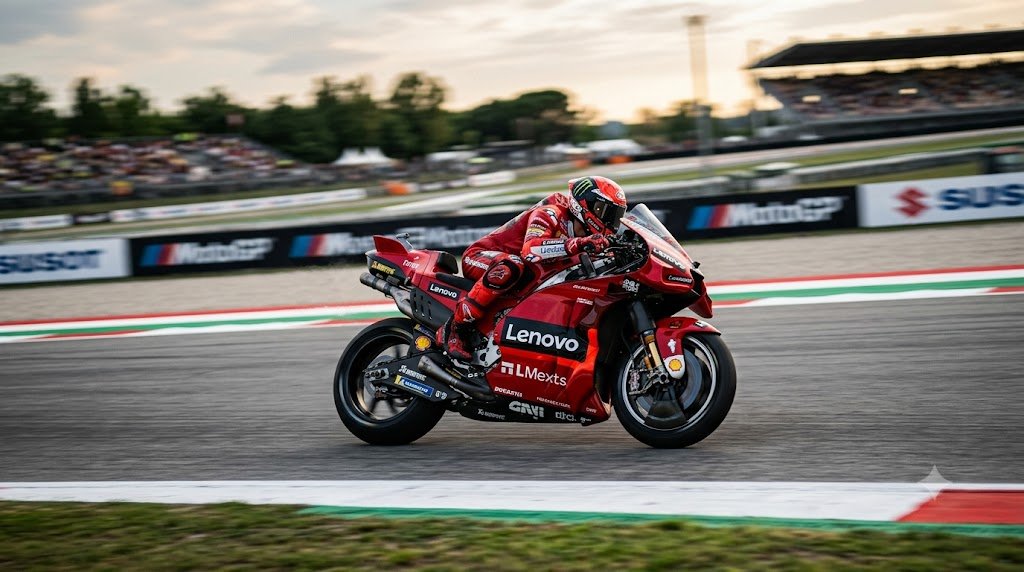
The latest benchmark arrived at Italy’s Mugello Circuit, where factory Aprilia rider Jorge Martin recorded an official top speed of 368.6 km/h (229.04 mph) during the 2026 Italian Grand Prix weekend. The achievement established a new all-time MotoGP speed record, surpassing the previous mark of 366.1 km/h shared by Brad Binder and Pol Espargaró.
The record highlights the remarkable evolution of MotoGP machinery, with modern prototype motorcycles now capable of exceeding speeds once considered nearly impossible for two-wheeled racing machines.
Mugello Remains MotoGP’s Ultimate Speed Arena
The Mugello Circuit has long been recognized as the fastest venue on the MotoGP calendar. Its 1.14-kilometer start-finish straight allows riders to fully exploit their motorcycles’ performance before braking heavily into the first corner.
Engineers explain that the combination of powerful V4 engines, advanced ride-height devices, aerodynamic winglets, and optimal slipstream conditions creates the perfect environment for record-breaking runs. As a result, nearly every official MotoGP top-speed record has been established at the Italian circuit.
Fastest Official MotoGP Speeds Ever Recorded
According to official MotoGP timing data, the fastest recorded speeds include:
| Rider | Motorcycle | Circuit | Speed |
|---|---|---|---|
| Jorge Martin | Aprilia RS-GP | Mugello (2026) | 368.6 km/h |
| Brad Binder | KTM RC16 | Mugello (2023) | 366.1 km/h |
| Pol Espargaró | KTM RC16 | Mugello (2024) | 366.1 km/h |
| Enea Bastianini | Ducati Desmosedici GP | Mugello (2023) | 364.8 km/h |
| Pedro Acosta | KTM RC16 | Mugello (2024) | 364.8 km/h |
These figures demonstrate how closely matched today’s manufacturers have become in outright straight-line performance.
Technology Drives Every New Record
MotoGP manufacturers invest millions of dollars each season to improve acceleration, aerodynamic efficiency, engine mapping, and chassis balance.
Ride-height devices reduce aerodynamic drag during acceleration, while sophisticated winglets generate stability at extreme speeds. Combined with lightweight carbon braking systems and Michelin racing tires, today’s MotoGP motorcycles achieve performance levels unimaginable just a decade ago.
Although top speed often attracts headlines, engineers emphasize that lap times are determined by the complete package. Cornering ability, braking performance, tire management, and rider consistency remain equally important in winning Grand Prix races.
MotoGP motorcycles are prototype racing machines built exclusively for competition and are not available for public purchase. Unlike production superbikes, these motorcycles incorporate custom-built engines, carbon fiber components, advanced electronics, and aerodynamic packages developed specifically for Grand Prix racing.
Another factor behind increasing top speeds is continuous aerodynamic development. Since winglets became common across the MotoGP grid, manufacturers have significantly improved stability during acceleration, allowing riders to remain fully committed on long straights while maintaining control at speeds above 360 km/h.
Safety has also advanced alongside performance. Modern racing suits equipped with airbag technology, improved helmet standards, stronger circuit barriers, and continuous track safety upgrades have helped protect riders as motorcycle performance reaches unprecedented levels.
Despite their incredible maximum speeds, MotoGP races are rarely won by outright velocity alone. Teams instead focus on achieving the best balance between engine power, fuel efficiency, tire wear, braking stability, and corner exit acceleration throughout an entire race distance.
As manufacturers continue refining engines and aerodynamics, many motorsport analysts believe the 370 km/h barrier could become the next milestone in MotoGP history if circuit conditions and regulations allow further development.