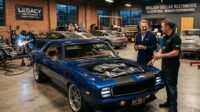
I remember standing in a sun-drenched warehouse in Los Angeles, watching a master technician drop a brand-new, supercharged V8 engine into the immaculate shell of a 1960s muscle car. The exterior was pure, unadulterated vintage cinema, but beneath the skin lay the high-tech soul of a modern track monster.
When the engine fired up, the raw, ferocious roar didn’t just shake the concrete floor; it shook my entire understanding of what a classic car could be.
That afternoon, I realized the automotive world had shifted on its axis, moving away from museum-piece trailer queens toward something far more electrifying.
We are currently witnessing a massive, high-octane revolution in the collector car market where old-school purism is taking a backseat to pure driving thrill. Wealthy enthusiasts are no longer content with beautiful vintage machines that leak oil, refuse to start on cold mornings, and handle like wet sponges.
Instead, they are pouring millions into “resto-mods”—classic automotive icons completely re-engineered from the ground up with cutting-edge modern performance technology. This ultimate guide explores how this fascinating subculture turned into a billion-dollar investment frontier.
The Death of the Trailer Queen
For decades, the peak of classic car collecting was the concours d’elegance, where vehicles were judged on having every single factory-correct screw and period-correct bias-ply tire. But let’s be entirely honest: driving an un-modified 1950s sports car on modern highways can be an exhausting, sweat-inducing chore without power steering, modern brakes, or reliable cooling systems.
The modern billionaire collector doesn’t want to just stare at their investment in a climate-controlled garage while sipping champagne. They want to drive it cross-country, attack canyon roads, and track it on weekends without a support team on standby.
This desire for usability has birthed a unique psychological shift in the luxury market, creating a brand-new definition of automotive perfection. A resto-mod delivers the ultimate intoxicating cocktail: the timeless, heart-stopping silhouette of a mid-century icon combined with the blistering speed, reliability, and air-conditioned comfort of a 2026 supercar.
It is the automotive equivalent of buying a gorgeous historic mansion that has been completely retrofitted with smart-home tech and a hidden elevator.
The Multi-Million Dollar Case Studies
If you think these are just souped-up hot rods built in backyard garages, the latest public auction results will completely shatter that assumption. Elite builders like Singer Vehicle Design (who reimagine classic Porsche 911s) and Eagle (famous for their breathtaking Jaguar E-Type evolutions) have waiting lists that stretch out for multiple years.
Buyers are happily handing over seven-figure sums for cars that technically started life as humble production vehicles decades ago.
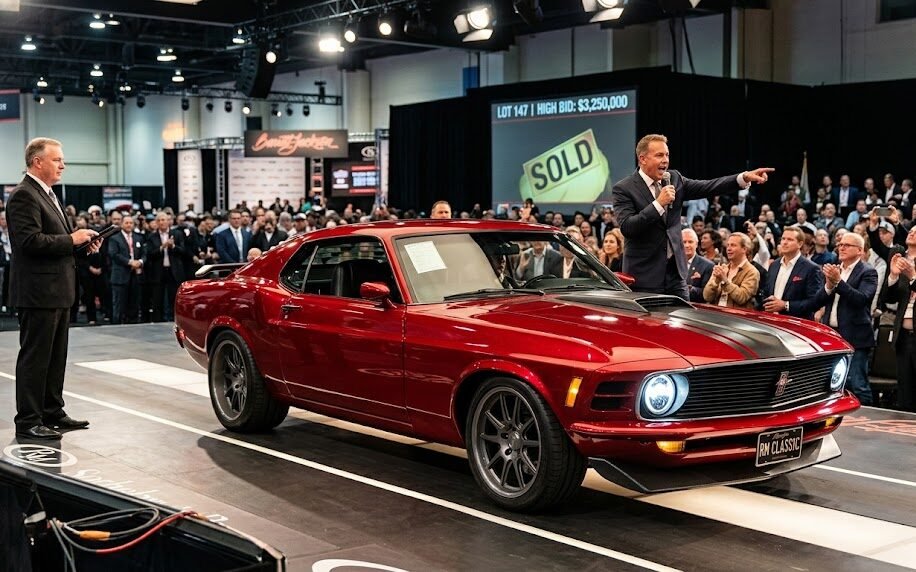
A spectacular case study occurred at a recent high-profile luxury auction, where a bespoke, carbon-fiber-bodied 1969 Dodge Charger resto-mod crossed the block. While a standard, immaculately restored ’69 Charger might fetch a respectable $150,000, this highly engineered masterpiece sold for a staggering $1.8 million.
The reason for the massive premium lay beneath the bodywork: a custom chassis, independent suspension, carbon-ceramic brakes, and a modern 1,000-horsepower crate engine. The market has spoken loudly, proving that elite engineering validation adds far more value than mere historical preservation.
Analyzing the Resto-Mod Market Data
The financial metrics surrounding this automotive phenomenon reveal a highly lucrative playground for savvy alternative investors and collectors alike. As younger, tech-savvy buyers enter the high-end collector space, their preferences are radically reshaping traditional market valuations:
| Market Segments | Growth & Valuation Data | Investment Opportunity |
| Elite Commission Valuations | Top-tier builds regularly trade between $800,000 to $2.5 Million+ | Commissioning a build from a renowned, branded shop offers the highest equity retention. |
| Demographic Shift | 68% of resto-mod buyers are Gen X and Millennials under the age of 55. | Focus on iconic 1970s, 80s, and 90s platforms that appeal directly to younger generational nostalgia. |
| Market Appreciation | Premium resto-mods have seen a 140% value increase over the past five years. | Look for builds that feature fully documented engineering blueprints and track-tested dynamics. |
The Art of the Invisible Upgrade
The true genius of a multi-million dollar resto-mod lies entirely in its masterful subtlety and hidden sophistication. The world’s finest builders possess the rare expertise required to upgrade every single component of a vehicle without ruining its original, nostalgic DNA. From the outside, the car looks exactly like the poster you had on your bedroom wall as a kid, retaining its beautiful chrome bumpers and period-correct paint finishes.
However, hidden beneath that vintage sheet metal is a lightweight carbon-fiber monocoque chassis that cuts the vehicle’s weight in half. The retro dashboard dials might look original, but they are actually driving advanced digital telemetry systems and custom Bluetooth audio setups. Suspension systems are swapped out for active, electronically adjustable setups that can change their characteristics at the push of a button. It takes immense engineering skill to make a car feel completely modern while keeping its historic soul intact.
Where the Savvy Money is Moving Next
As the top tier of the market becomes highly saturated with classic Porsches and American muscle cars, the next wave of investment is moving toward unexpected platforms. Smart collectors are currently turning their attention toward vintage SUVs, classic British roadsters, and early Japanese sports icons from the 1990s.
The strategy for entering this lucrative space requires partnering with builders who treat car construction like fine watchmaking or haute couture fashion. By focusing on mechanical transparency, high-end materials, and extreme performance capabilities, these vehicles transcend the automotive realm to become rolling works of contemporary art. In a world rapidly moving toward sterile, autonomous electric commuter pods, these loud, visceral, beautiful mechanical masterpieces will only continue to skyrocket in value.
Frequently Asked Questions
Are resto-mods accepted at traditional classic car shows?
While traditional, strict concours events like Pebble Beach still prioritize factory-original cars, a massive wave of modern luxury events fully embrace resto-mods. Shows like the Goodwood Festival of Speed and specialized design exhibitions celebrate these vehicles as pinnacle achievements in modern automotive engineering and style.
How does a resto-mod affect the value of an original classic car?
Purists often argue that modifying a rare classic ruins its historical value, which is true for ultra-rare, matching-numbers survivors. However, elite builders typically source common, high-production base models or salvaged shells for their resto-mods, effectively creating brand-new value out of vehicles that were otherwise deteriorating.
Can a resto-mod be serviced at a regular dealership or mechanic shop?
Because resto-mods are highly customized, bespoke creations, they cannot be serviced at standard commercial dealerships. They require specialized attention from high-performance tuning shops, custom hot rod builders, or the original coachbuilder who constructed the vehicle, utilizing custom components and modern diagnostic software.