Stepping into the lively streets of Jakarta or Dili reveals a shared Southeast Asian obsession: the automatic scooter. From nimble daily commuters to rugged adventure bikes, two-wheelers are the undisputed kings of local transport. However, taking a closer look at the price tags on identical models reveals a surprisingly wide financial gap.
A popular commuter bike assembled in West Java can suddenly cost significantly more once it crosses the border into Timor Leste. This price difference is not merely a random quirk of local dealerships. Instead, it reflects a complex story of global currencies, international trade policies, logistics, and local tax structures.
Understanding this cross-border price gap requires looking beyond showroom floors. It involves examining how two neighbouring nations on the same island navigate vastly different economic realities.
The Numbers on the Price Tag
To understand the difference, consider one of Southeast Asia’s most recognizable two-wheelers: the humble Honda Beat. In Indonesian showrooms, a fresh-off-the-line Beat typically carries a retail price of around IDR 18 million to IDR 19.5 million. Convert that directly into US Dollars, and the bike sits comfortably under the $1,250 mark.
Cross the land border into Batugade, Timor Leste, and the math changes completely. The exact same motorcycle imported from Indonesia often sells for anywhere between $1,500 and $1,800 at local dealerships. A difference of several hundred dollars might sound modest at first glance, but it represents a substantial percentage jump for an entry-level commuter vehicle.
The markup becomes even more pronounced when upgrading to higher-end models like the Yamaha NMAX or Honda PCX. A mid-tier maxi-scooter that costs roughly IDR 32 million ($2,050) in Surabaya can easily fetch up to $2,700 or more in Dili.
Local Manufacturing vs. Total Importation
The primary driver behind this price disparity comes down to where the vehicles are actually built. Indonesia is a global automotive powerhouse, housing massive manufacturing plants operated by Astra Honda, Yamaha Indonesia Motor Manufacturing, and TVS. Local production means lower component costs, cheaper supply chains, and zero import tariffs on raw materials sourced domestically.
Timor Leste, on the other hand, operates without large-scale domestic vehicle assembly plants. Virtually every motorcycle cruising down the roads of Dili must be shipped in from overseas—primarily from Indonesia, Thailand, or Vietnam. Importing finished goods inherently adds layers of expense before the vehicle even reaches the showroom floor.
Every imported bike incurs maritime freight fees, international logistics insurance, port handling charges, and warehousing costs. Freight forwarders must factor in ocean transit routes or long overland truck journeys across the West Timor border, all of which get bundled directly into the final consumer price tag.
Currency Exchange and Purchasing Power
Another crucial factor shaping this pricing dynamic is the currency system. Indonesia relies on the Indonesian Rupiah (IDR), a currency that allows local manufacturers to price goods in line with domestic wage levels and domestic inflation trends.
Timor Leste adopted the United States Dollar (USD) as its official currency in 2000 to stabilize its post-independence economy. While using the USD protects Timor Leste from hyperinflation, it creates an interesting dynamic for imported goods. When Indonesian exporters quote wholesale prices in USD, fluctuations in the Rupiah-to-Dollar exchange rate directly influence dealer margins in Dili.
Furthermore, purchasing power varies greatly between the two sides of the island. Although the dollar is strong, Timor Leste’s import-heavy economy means that everyday items—including transport—carry international price tags. Dealers in Dili must maintain higher profit margins per unit sold to cover their overhead expenses in a smaller, dollarized retail market.
Taxes, Customs, and Regulatory Clearance
Government taxation plays a massive role in setting retail vehicle prices worldwide, and the Timor-Indonesia corridor is no exception. Indonesia levies Value Added Tax (PPN) and local vehicle registration fees (BBNKB), which are already baked into the “On The Road” (OTR) price quoted to buyers in cities like Kupang or Denpasar.
When a dealer exports those same units to Timor Leste, the bikes pass through international customs clearance. Timor Leste applies its own standard import duties, sales taxes, and excise taxes on motor vehicles entering port facilities or border checkpoints.
Documenting, inspecting, and clearing imported vehicles requires specialized customs clearance agents and administrative fees. These regulatory processes ensure safety compliance, but they inevitably force dealers in Dili to raise sticker prices to protect their bottom line.
Border Trade and the Informal Market
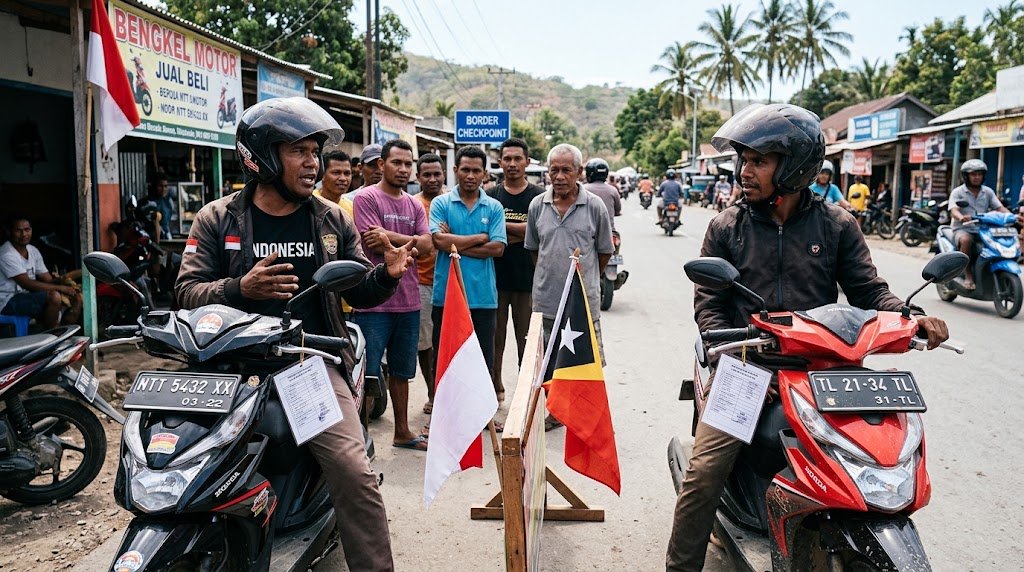
Because of this noticeable price gap, an informal cross-border market naturally thrives along the border separating Indonesian West Timor and independent Timor Leste. Residents in border towns like Atambua regularly see the economic influence of cross-border trade firsthand.
In previous years, buyers and traders explored creative avenues—from temporary entry permits to informal cross-border transfers—to take advantage of cheaper Indonesian sticker prices. However, strict border regulations and registration laws in Timor Leste mean that legally licensing a foreign-bought bike requires paying official import taxes anyway.
Despite these regulatory checks, the border region remains an active economic zone. Indonesian dealerships in West Timor frequently supply official distributors in Timor Leste, creating a tightly connected supply chain that keeps the neighboring nation on two wheels.
Looking Ahead at the Two-Wheeler Market
As infrastructure improves across both nations, the demand for reliable personal transport continues to skyrocket. Timor Leste’s ongoing investments in paved road networks are encouraging more citizens to purchase fuel-efficient scooters and durable utility bikes for daily commuting.
Meanwhile, Indonesian manufacturers are eager to expand their export footprints across Southeast Asia. With Timor Leste actively seeking full membership in ASEAN, trade barriers and customs procedures may streamline over the coming decade.
For now, the price difference remains a classic lesson in international economics. The next time you spot a scooter zipping down the coastal highway in Dili, remember that its price tag carries the story of ocean freight, customs tariffs, currency conversions, and the journey across one of Southeast Asia’s most dynamic borders.