
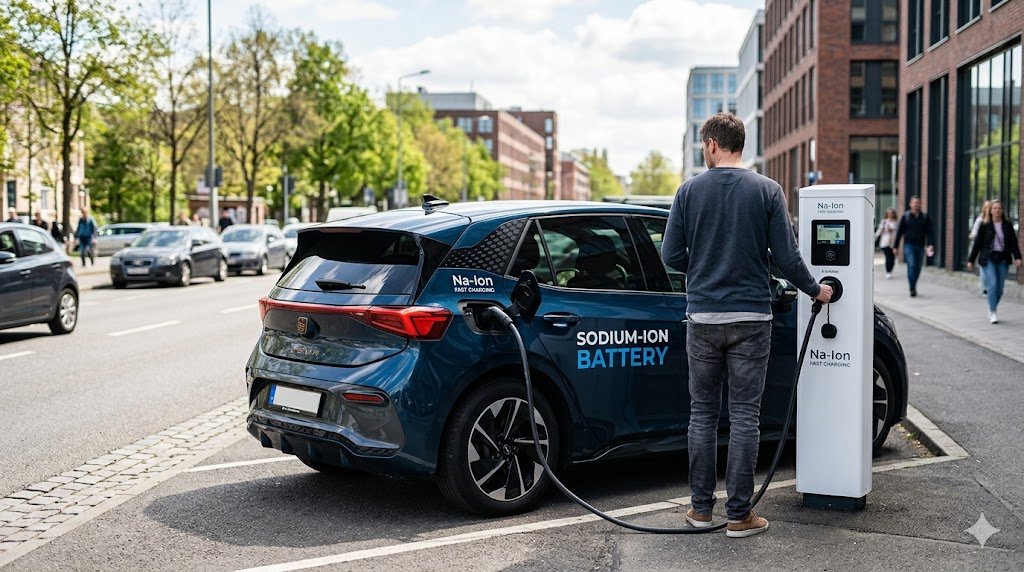
Lithium-ion batteries have powered the global electric vehicle revolution. From compact city cars to luxury SUVs, lithium-based technology has become the foundation of modern EV manufacturing. However, as electric vehicle adoption accelerates worldwide, automakers are facing a new challenge: securing enough battery materials to sustain long-term growth.
Rising demand for lithium, geopolitical uncertainties, mining limitations, and fluctuating raw material prices have encouraged manufacturers to explore alternative battery technologies. Among the most promising solutions is sodium-ion technology, a battery chemistry once considered a niche concept but now emerging as a serious contender in the future of electric mobility.
In 2026, sodium-ion battery electric cars are gaining unprecedented attention. Automakers, battery producers, and investors are increasingly viewing sodium as a strategic option that could diversify supply chains, reduce costs, and support broader EV adoption. While lithium-ion batteries remain dominant, sodium-ion technology is rapidly moving from laboratory research into commercial reality.
Why the Industry Is Looking Beyond Lithium
Lithium has played a central role in the EV boom.
However, success has created new challenges.
As electric vehicle production expands globally, demand for lithium continues to increase. This growing demand places pressure on mining operations, processing facilities, and supply chains.
Manufacturers face concerns such as:
- Raw material price volatility
- Supply chain concentration
- Geopolitical risks
- Environmental challenges related to mining
- Long-term resource availability
These concerns do not necessarily signal the end of lithium-ion batteries. Instead, they highlight the importance of developing complementary technologies that can strengthen industry resilience.
Sodium-ion batteries have emerged as one of the most attractive alternatives.
What Makes Sodium-Ion Batteries Different?
At a basic level, sodium-ion batteries operate similarly to lithium-ion batteries.
Both technologies store and release energy through the movement of charged ions between electrodes.
The key difference lies in the materials used.
Sodium is significantly more abundant than lithium and can be sourced from widely available natural resources.
This abundance offers several potential advantages:
- Lower material costs
- Greater supply chain diversity
- Reduced dependence on specific mining regions
- Improved scalability for mass-market applications
For automakers seeking long-term stability, these benefits are increasingly difficult to ignore.
A Real-World Industry Shift
Several battery manufacturers have already begun commercializing sodium-ion technology.
Automotive companies are testing sodium-ion battery packs in selected vehicle categories, particularly entry-level electric vehicles and urban mobility solutions.
One industry executive recently described sodium-ion batteries not as a replacement for lithium-ion technology but as an additional tool in the EV ecosystem.
This perspective reflects a growing consensus.
Rather than creating a winner-takes-all scenario, the future EV market may feature multiple battery chemistries optimized for different use cases.
Case Study: The Urban Electric Vehicle Segment
Consider a city-focused electric vehicle designed primarily for daily commuting.
The average driver may travel less than 100 kilometers per day, rarely requiring the extended range offered by premium lithium-ion batteries.
In this scenario, sodium-ion batteries become particularly attractive.
Manufacturers can potentially reduce battery costs while still providing sufficient driving range for everyday transportation needs.
For consumers, this could translate into more affordable EV options.
For automakers, it opens opportunities to expand electric mobility into price-sensitive markets.
Cost Advantages Could Reshape EV Accessibility
One of the most significant barriers to EV adoption remains vehicle cost.
Battery packs represent a substantial portion of total production expenses.
Because sodium is more abundant and potentially less expensive to source, sodium-ion batteries could help reduce manufacturing costs over time.
This creates opportunities in several areas:
- Entry-level electric cars
- Shared mobility fleets
- Commercial delivery vehicles
- Emerging markets
- Public transportation systems
Lower battery costs may allow manufacturers to reach new customer segments previously priced out of the EV market.
Comparing Sodium-Ion and Lithium-Ion Batteries
While sodium-ion batteries offer compelling advantages, they also involve trade-offs.
| Feature | Sodium-Ion Batteries | Lithium-Ion Batteries |
|---|---|---|
| Material Availability | Very High | Moderate |
| Supply Chain Diversity | Strong | Limited in some regions |
| Cost Potential | Lower | Higher |
| Energy Density | Lower | Higher |
| Commercial Maturity | Emerging | Established |
| Cold Weather Performance | Strong | Good |
| Long-Range Capability | Moderate | Excellent |
| Scalability | High Potential | High |
This comparison illustrates why many experts expect both technologies to coexist rather than directly compete in every market segment.
A Unique Perspective: The EV Industry Is Becoming Battery-Agnostic
For years, discussions about electric vehicles focused heavily on vehicle brands.
Today, battery chemistry itself has become a strategic competitive factor.
Automakers increasingly recognize that relying on a single battery technology creates vulnerabilities.
The future may belong to manufacturers capable of deploying multiple battery solutions depending on customer needs, vehicle categories, and regional supply conditions.
This shift resembles the evolution of energy markets, where diversification often improves resilience.
In the EV world, battery diversity may become just as important as vehicle design.
Opportunities Emerging Across the Value Chain
The rise of sodium-ion technology is creating opportunities beyond vehicle manufacturing.
| Opportunity Area | Growth Driver | Potential Impact |
| Sodium-Ion Battery Production | Alternative battery demand | High |
| Energy Storage Systems | Grid-scale applications | Very High |
| Battery Materials Supply | Raw material diversification | Strong |
| EV Manufacturing | Lower-cost vehicle production | High |
| Research & Development | Technology optimization | Significant |
| Recycling Infrastructure | Future battery lifecycle management | Growing |
These opportunities suggest that sodium-ion adoption could influence multiple industries simultaneously.
Challenges That Still Need Solving
Despite growing momentum, sodium-ion technology remains in an early stage compared to lithium-ion batteries.
Several challenges remain.
Lower Energy Density
Sodium-ion batteries generally store less energy per unit of weight.
This can limit driving range in certain applications.
Manufacturing Scale
Production capacity remains relatively small compared to established lithium-ion supply chains.
Technology Maturity
Further innovation is needed to optimize performance, durability, and cost competitiveness.
Consumer Awareness
Most consumers are still unfamiliar with sodium-ion technology.
Education will play an important role in market acceptance.
These challenges are significant but not necessarily prohibitive.
Many emerging technologies experience similar obstacles before reaching mainstream adoption.
Why Investors Are Paying Attention
Battery technology has become one of the most strategically important sectors in the global economy.
Investors increasingly view sodium-ion development as a potential growth opportunity.
The reasons are straightforward:
- EV adoption continues expanding.
- Energy storage demand is increasing.
- Supply chain diversification is becoming a priority.
- Governments are supporting battery innovation.
As a result, funding for alternative battery technologies continues to grow.
The market sees sodium-ion not merely as an experimental concept but as a potentially important pillar of future electrification strategies.
The Future of Sodium-Ion Electric Vehicles
Industry experts generally agree that lithium-ion batteries will remain dominant for many years, particularly in premium and long-range vehicle categories.
However, sodium-ion technology appears increasingly positioned to capture specific segments where affordability, resource availability, and scalability matter most.
Future adoption is likely to be strongest in:
- Budget-friendly EVs
- Urban mobility vehicles
- Commercial fleets
- Two-wheel electric transportation
- Stationary energy storage systems
As research progresses and manufacturing scales improve, performance gaps may continue narrowing.
The result could be a more diverse, resilient, and accessible electric vehicle ecosystem.
Rather than replacing lithium, sodium may help expand the overall EV market by offering manufacturers additional flexibility and consumers more affordable choices.
In an industry built on innovation, the next breakthrough may not come from discovering a rare material. It may come from embracing one of the most abundant elements on Earth.
Frequently Asked Questions (FAQ)
1. What is a sodium-ion battery?
A sodium-ion battery is an energy storage technology that uses sodium ions instead of lithium ions to store and release electrical energy.
2. Why are automakers interested in sodium-ion batteries?
Automakers see sodium-ion batteries as a way to reduce supply chain risks, lower costs, and diversify battery sourcing strategies.
3. Are sodium-ion batteries better than lithium-ion batteries?
Not necessarily. Each technology has strengths and weaknesses, making them suitable for different applications.
4. Will sodium-ion batteries replace lithium-ion batteries?
Most experts expect both technologies to coexist, serving different market segments and vehicle categories.
5. What are the biggest advantages of sodium-ion batteries?
Abundant raw materials, potential cost savings, and improved supply chain resilience are among the primary advantages.
6. When will sodium-ion EVs become common?
Commercial adoption is already beginning, but broader market penetration will likely occur gradually over the coming years.