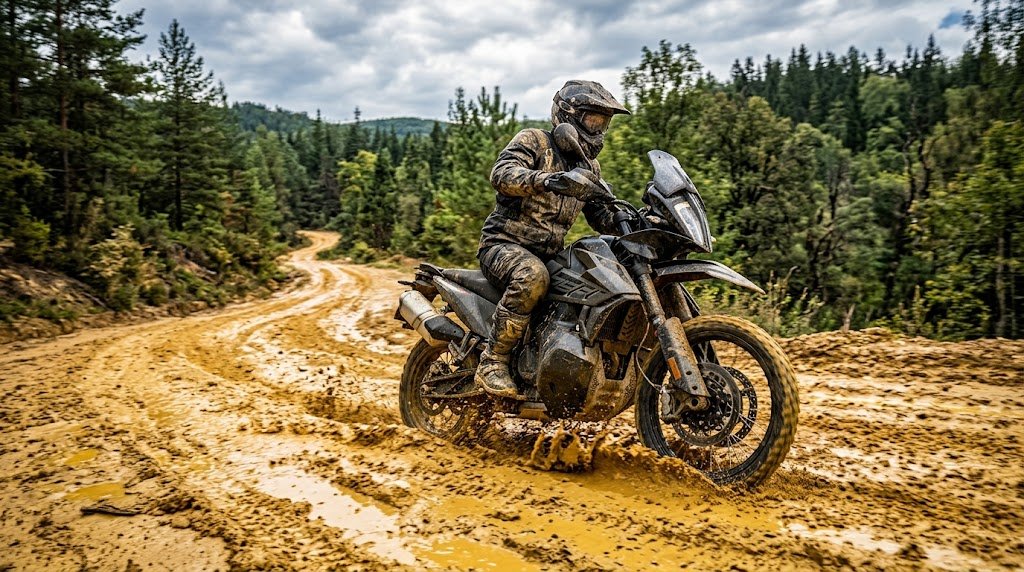
There is something undeniably mesmerizing about rolling up to an endless stretch of yellow clay dirt road. To the untrained eye, it looks like an invitation to pure off-road freedom, a scenic canvas cut through lush greens and rugged landscapes. To an experienced rider, however, yellow clay is a glorious chameleon that transforms from a sun-baked dirt superhighway into a high-octane mud bath at the slightest hint of rain.
Navigating yellow clay terrain requires a unique blend of mechanical power, mechanical sympathy, and serious rider finesse. Unlike standard gravel or loose topsoil, yellow clay packs tightly, holds onto moisture, and creates an unpredictably dynamic surface. Whether you are a weekend warrior chasing trail thrills or a daily commuter tackling rugged rural passes, riding yellow clay is the ultimate test of two-wheeled adaptability.
       , - ~ ~ ~ - ,
   , '               ' ,      [ RIDE THE CLAY ]
  ,  (o)           (o)  ,     -----------------
 ,                       ,    Power. Balance. Traction.
 ,       .---.           ,
  ,     /     \         ,
   ,   |  ===  |      ,'
     ' - ~ ~ ~ - '
The Unique Personality of Yellow Clay
Yellow clay is not your average dirt path. When dry, it bakes under the sun into a concrete-hard shell crisscrossed with deep ruts, offering surprisingly high traction but punishing suspension mistakes instantly. Hit a dry rut at the wrong angle, and your front wheel will immediately try to chart its own course without asking for your permission.
When wet, yellow clay undergoes a complete personality shift. It absorbs water quickly, creating a greasy top layer over a rock-solid base before turning into a thick, paste-like sludge. This wet clay clings aggressively to everything, packing into tire treads, jamming front fenders, and transforming high-performance knobby tires into smooth, slick rubber donuts in a matter of seconds.
To conquer this unpredictable surface, your machine choice matters just as much as your riding technique. You need a motorcycle that balances raw tractor-like low-end torque with manageable overall weight, generous ground clearance, and long-travel suspension capable of soaking up sudden rut impacts.
The Ultimate Garage: Top Machines for the Yellow Clay Challenge
Yamaha Tenere 700
Known globally as the minimalist king of middleweight adventure bikes, the Tenere 700 features a legendary parallel-twin engine delivering predictable, linear torque. Its simple electronics and slim chassis make it exceptionally easy to stand up and balance when navigating slick, narrow clay trails.
Honda CRF300L Rally
Lightweight, nimble, and practically indestructible, this dual-sport champion excels when the yellow clay turns into a soup-like swamp. Its manageable weight means you can easily extract it if you get stuck, while its plush suspension effortlessly glides over hard-baked clay ridges.
KTM 690 Enduro R
For riders who want unmatched power-to-weight performance on challenging terrain, this single-cylinder powerhouse delivers unmatched throttle response and premium hardware. It cuts through soft clay beds with aggressive authority, giving experienced riders total control over dynamic rear-wheel steering.
| Motorcycle Model | Engine Type | Dry Weight | Ground Clearance | Best Clay Terrain Specialty |
| Yamaha Tenere 700 | 689cc Parallel-Twin | 204 kg | 240 mm | Fast, hard-baked dry clay tracks |
| Honda CRF300L Rally | 286cc Single-Cylinder | 153 kg | 275 mm | Wet, sticky clay & technical mud |
| KTM 690 Enduro R | 693cc Single-Cylinder | 146 kg | 269 mm | High-speed deep rut navigation |
Pro Survival Tips for Navigating Sticky Trails
Riding on yellow clay requires completely flipping standard street-riding instincts on their head. Smoothness is the absolute law of the land, as abrupt throttle snaps or heavy front braking will instantly break traction and send you sliding into the brush.
-
Lower Your Tire Pressure: Dropping your tire pressure by 3 to 5 PSI widens your tire contact patch, allowing tread blocks to flex and shed sticky clay build-up much faster.
-
Master Weight Distribution: Keep your body weight centered or slightly backward while standing on the footpegs to press the rear wheel down for maximum drive traction.
-
Avoid Front Brake Overuse: Rely primarily on engine braking and gentle rear brake pressure; grabbing a fistful of front brake on wet clay guarantees a sudden front-end wash.
-
Keep Momentum Constant: Maintaining a gentle, steady momentum prevents your wheels from digging deep, inescapable trenches into soft wet clay patches.
“Respect the clay, stay loose on the handlebars, and let the bike move beneath you—fighting sticky clay only guarantees you will end up picking up a heavy motorcycle.”
Maintenance Hacks After Riding the Mud
Once the trail ride ends, the battle against yellow clay shifts directly to your home garage. Dried clay acts like concrete, trapping moisture against metal parts, stripping away chain lubrication, and rapidly scratching delicate fork seals if left untreated for too long.
Always hose down your motorcycle while the clay is still wet if possible, using plenty of low-pressure water to soften up packed mud deposits around the radiator fins and brake calipers. Never blast high-pressure water directly into wheel bearings, chain O-rings, or electrical connectors, as this forces fine clay grit deeper into critical moving components.
After cleaning, thoroughly dry the motorcycle, re-lubricate the drive chain generously, and inspect front fork legs for dried mud specks. Taking ten extra minutes to care for your machine after a wild clay ride ensures your motorcycle stays fully prepared for the next off-road adventure.
Yellow clay roads might present one of the most unpredictable riding surfaces on the planet, but they also offer some of the most thrilling memories you can make on two wheels. Equipping yourself with the right motorcycle, practicing smooth throttle control, and maintaining momentum will transform every dirty trail into an unforgettable victory ride.